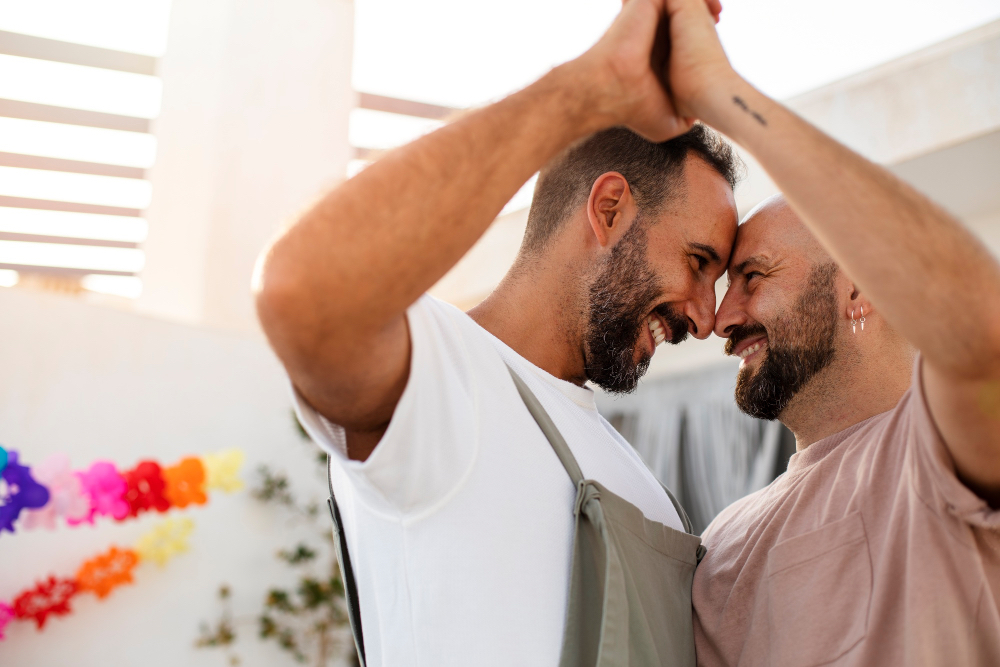
Gay Men and Body Image: Where the Pressure Really Comes From
Body image struggles in gay men are rarely just about appearance. They're often about belonging, worth, and a standard that was never built to include everyone.
Most gay men know the feeling. You walk into a gym, open a dating app, scroll through Instagram, or show up to a party, and within seconds some part of your brain is already taking inventory. Comparing. Evaluating. Measuring yourself against an aesthetic standard that feels both everywhere and just out of reach.
Body image issues in gay men are extraordinarily common. And yet they're surprisingly rarely talked about honestly, because in a community that celebrates certain bodies so visibly, admitting that the celebration feels exclusionary, or that you're struggling, can itself feel too vulnerable.
So let's talk about it honestly.
Where the Pressure Actually Comes From
It would be easy to blame social media, or dating apps, or gay culture broadly. And those things do play a role. But the pressure gay men feel around their bodies has deeper roots than any single platform or community norm.
The absence of unconditional belonging
Researchers who study gay men and body image consistently find that minority stress plays a significant role. When you grow up feeling like belonging is conditional, like you have to earn your place, prove your worth, or meet a standard to be accepted, the body becomes one of the arenas where that learning happens. If I look right, maybe I'll be enough. If I'm attractive enough, maybe I'll belong.
Gay media and community aesthetics
Gay male culture has historically celebrated very specific body types, which get reinforced across dating apps, gay media, nightlife culture, and social media in ways that are relentless and often invisible precisely because they're so normalized. It's not that gay men are uniquely shallow. It's that those images are everywhere, and they set a standard that most bodies can't meet.
The role of sex and desirability
For gay men, physical desirability and sexual desirability are often experienced as closely linked, and rejection on dating apps or in sexual contexts can land differently than it might for straight men, hitting the body image wound directly. Over time, a string of those experiences can harden into a belief: my body is the problem.
What Body Image Distress Actually Looks Like
Body image issues in gay men don't always look like what you'd expect. They don't always involve eating disorders or hours at the gym, though those experiences are real and more common in gay men than in the general male population.
Sometimes it looks quieter:
- Avoiding intimacy or sex because you don't feel comfortable in your body
- Spending significant mental energy on food, exercise, or appearance that interferes with other parts of life
- Feeling genuinely unable to receive compliments about your appearance
- Comparing yourself to other men constantly and always coming up short
- Dressing in ways designed to hide your body rather than express yourself
- A persistent low-level dissatisfaction with how you look that no amount of improvement seems to resolve
That last one is worth sitting with. Body image distress isn't really about the body. It's about what the body has come to represent: worth, belonging, desirability, safety. Which is why changing the body rarely resolves it.
The Eating Disorder Gap
One thing worth naming directly: gay men are significantly more likely than straight men to experience eating disorders, including anorexia, bulimia, and muscle dysmorphia (sometimes called "reverse anorexia," where the fear is being too small rather than too large). And yet gay men are dramatically underrepresented in eating disorder treatment, partly because the cultural image of someone with an eating disorder doesn't typically look like a gay man.
If you recognize disordered patterns around food, exercise, or body control in yourself, restriction, bingeing, compulsive exercise, or an obsessive relationship with your physical appearance, that's worth taking seriously. It's not just "caring about your health." And it's very treatable with the right support.
What Actually Helps
Separating your worth from your appearance
This sounds simple and is genuinely hard work. Most gay men intellectually know their worth isn't determined by their body. But intellectual knowledge and embodied belief are different things. The work involves slowly building a relationship with yourself that isn't organized around how you look, and that usually requires help.
Understanding where the standard came from
The aesthetic standard gay men are measured against, and measure themselves against, didn't emerge from nowhere. It was constructed, it's been marketed, and it serves particular interests. Getting some critical distance from it, understanding it as a cultural product rather than a natural truth, can loosen its grip.
Working through the underlying belonging wound
Because body image distress in gay men is so often connected to deeper questions about worth and belonging, the most effective work tends to happen at that level rather than at the level of the body itself. Therapy that understands the specific experience of gay men, the minority stress, the conditional belonging, the complicated relationship with community, can reach the root of it in ways that diet culture and fitness culture never will.
Finding community that actually includes you
Not every gay community space centers the same narrow aesthetic. Finding spaces, online or in person, where a range of bodies are genuinely welcomed, not just tolerated, can quietly shift something important.
Your Body Was Never the Problem
Gay men and body image is a topic that deserves more honest conversation than it usually gets. The pressure is real, the distress is real, and the roots of it go deeper than vanity or insecurity.
Your body was never the problem. The messages you absorbed about what your body needed to be in order for you to belong, those are worth examining.
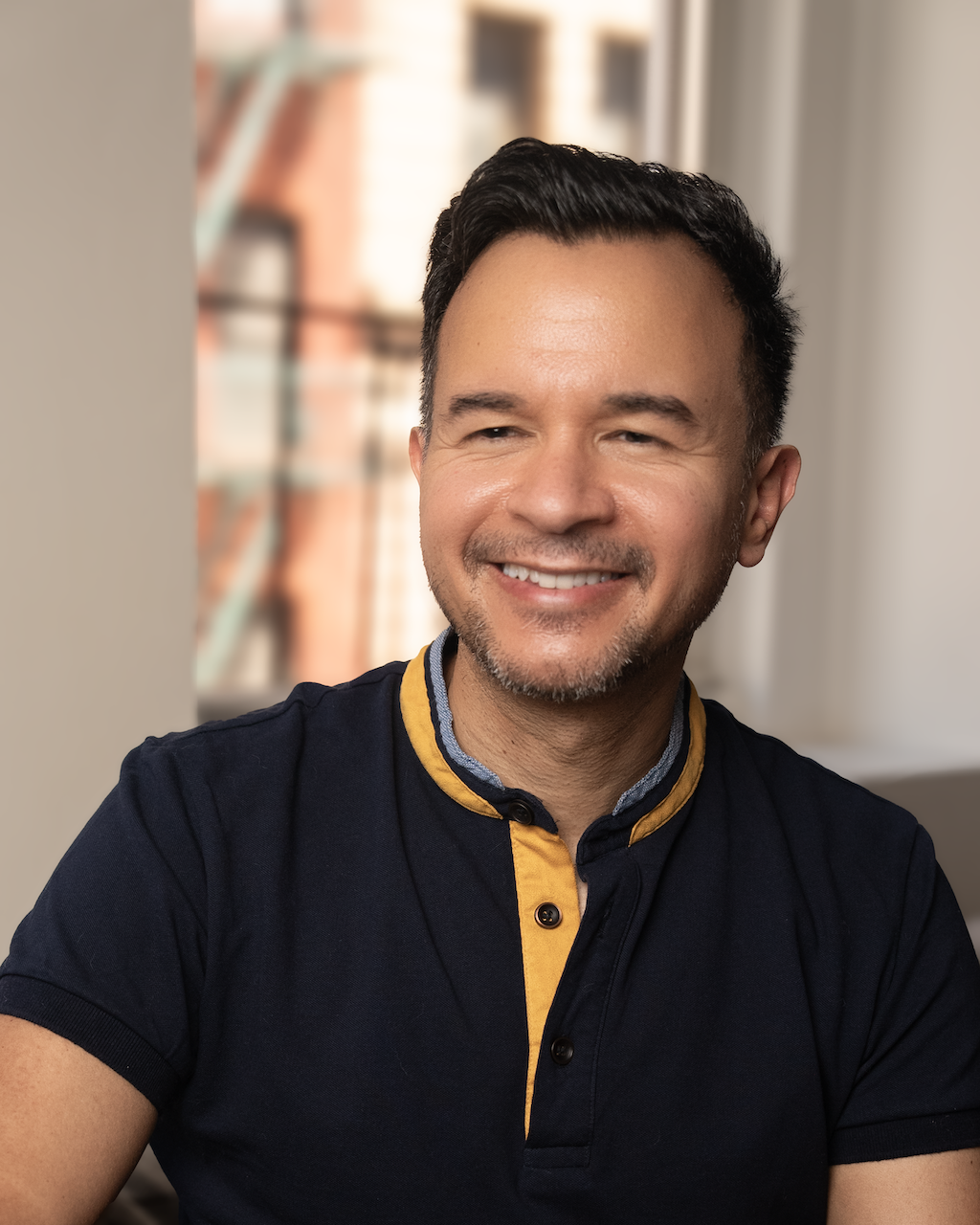
Dr. Israel Martinez
Dr. Israel Martinez is a gay men's therapist and AASECT Certified Sex Therapist with 20 years of experience in LGBTQ+ therapy, internalized homophobia, and sexual intimacy.